
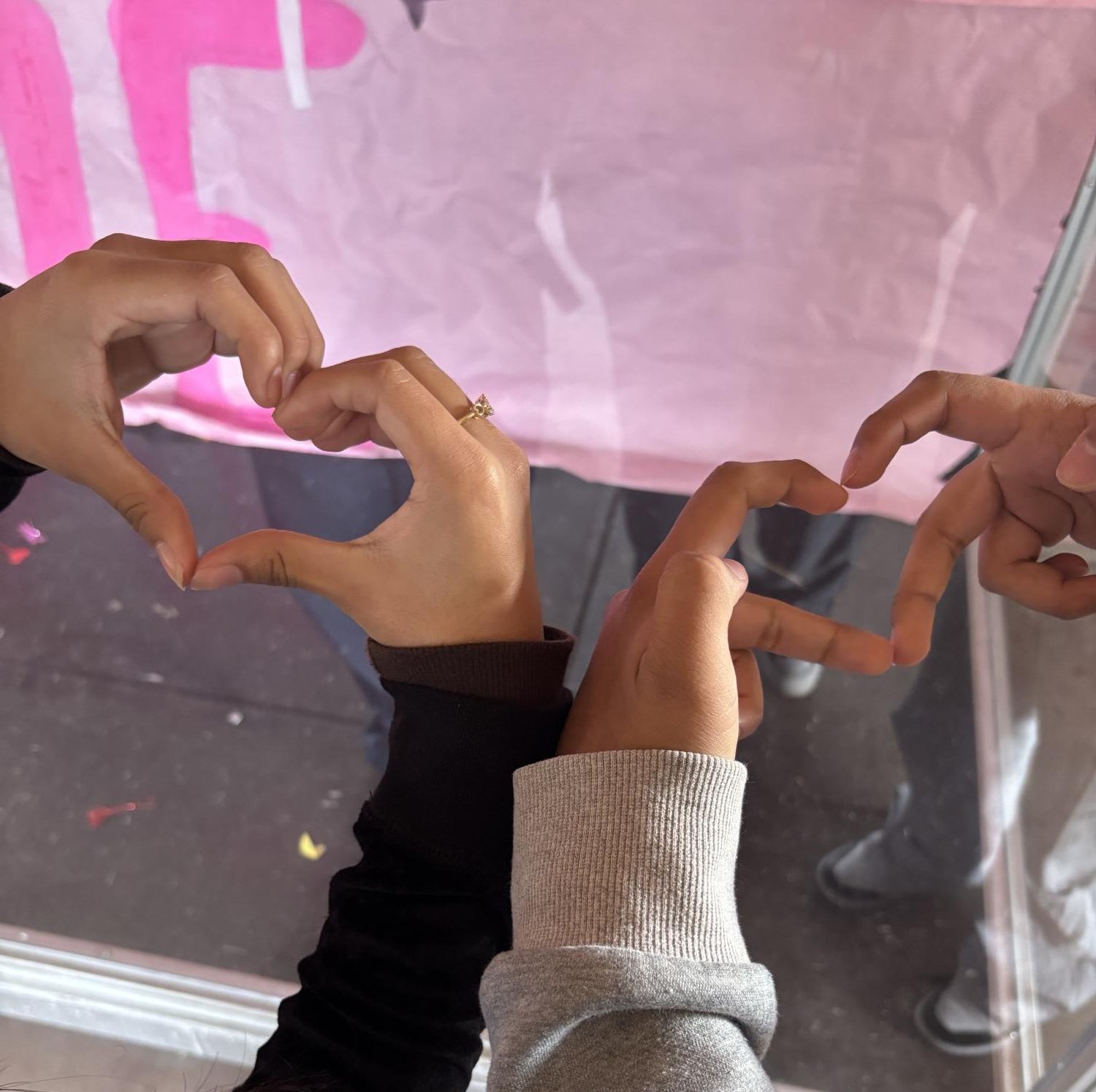
Valentine’s Day is right around the corner and love is a huge topic that surrounds this time of year. Love can be discovered in friendships and relationships by showing care, reassurance and loyalty.
This being said, love can be interpreted in many different ways. Teenagers can think differently about what “love” is depending on their experiences with others, whether it be romantically or platonic.
To better understand how teens define love today, students at Del Mar shared their personal perspectives based on their experiences and connections. These reflections highlight how love can mean different things based on personal memories, relationships and experiences that have influenced their views on love.
Bella Tierra, a freshman, provides her viewpoint on love and how it has been shaped by her views and experiences. Tierra goes into detail about what she thinks of when she hears the word love.
“The first thing I think about when I hear the word love is happiness. That’s because when you love someone, that person brings you happiness, and it’s a joy to be around them,” says Tierra.
From her own perspective, she feels that love is more focused on romantic relationships, rather than friendships.
“In relationships, you have to be consistent and reassure your partner. Meanwhile, for friendships, you don’t really tell a friend ‘I love you,’ but you may act on it,” says Tierra, “Saying ‘I love you’ in a relationship means a lot more.”
Roux Tyler Umali, a sophomore, prioritizes platonic friendships over romantic relationships.
“Romantic relationships have felt unstable for me and bring stress and emotional exhaustion, while friendships feel more genuine,” says Umali.
When thinking about love, Umali has had negative impressions from past relationships and it makes him feel like he is guarded from his partner rather than being genuine.
“Experiences with dishonesty and mixed signals made me associate love with anxiety instead of comfort, and it has made it harder for me to trust people in romantic situations,” says Umali.
For Umali, friendships feel more superior when it comes to really loving and caring for someone, even if it’s in a platonic way.
“Real care can be consistent, honest and peaceful without manipulation or pressure,” says Umali, expressing how platonic friendships can show an equal amount of care and respect.
Justin Perez, a sophomore, believes love is defined more by actions than words.
“Real love isn’t necessarily shown through feelings, but through proof,” says Perez, “Such as always supporting them, being there for them through thick and thin, constantly putting effort.”
Perez feels that in the past couple of years, people’s expectations of love have been modified, causing him to change his understanding of its meaning.
“When I was in middle school, people had high standards for relationships. I think this changed my understanding of love because many people back then only cared about the value or price of things,” Perez said.
Depending on different experiences, teenagers may associate love with complete happiness or complete loneliness, but that’s not the whole truth.
“People often mistake love for lust because many perceive lust as love,” says Perez, “They become physical [with their actions] and believe that is all there is to love.”
Across friendships and relationships, teenagers describe love as something that’s seen through actions rather than words themselves, but they often consider love to be about relationships rather than being platonic.






Angel A • Feb 13, 2026 at 9:45 pm
Love this article