English Language Development (ELD), plays an essential role in helping students succeed academically while learning English.
The ELD program is designed not only to improve students’ language skills but also to ensure that multilingual learners have equal access to education, college opportunities, and future careers.
Rather than being seen as a limitation, ELD is treated as a supportive pathway that helps students grow during one of the most important stages of their academic journey.
For many students, learning academic English can be one of the most challenging parts of school.
ELD student An Doan shared, “I think the most challenging part of this class is understanding.”
This statement reflects a common struggle among English learners understanding complex academic vocabulary, instructions, and classroom discussions. They can get a grasp on the language but struggle with reading and writing and can feel overwhelmed.
California has one of the largest populations of English learners, it is important that ELD classes aim to close this gap by giving students the tools and confidence they need to fully understand what is being taught in all their classes.
To support these students, the state has developed specific ELD standards that focus on reading, writing, listening, and speaking skills while students continue learning grade-level content.
These standards ensure that English learners are not held back academically while developing English proficiency and academic growth.
ELD Teachers work closely with students to help them understand academic vocabulary, analyze complex texts, and express their ideas clearly in both written and spoken English. The goal is to not separate students based on language barrier, but to help them fully participate in their classes alongside their peers creating a supportive environment where students feel comfortable asking questions, practicing English, and making mistakes as part of the learning process.
Teachers also focus on specific strategies that help students become independent learners. These include using context clues to understand unfamiliar words, annotating texts to improve comprehension, asking clarifying questions, and participating in collaborative discussions.
These strategies are not only helpful for learning English but are also essential skills for college-level coursework. By learning these techniques early, ELD students are better prepared for future academic challenges.
ELD classes also share similarities with AVID-style classes because of their strong focus on academic success skills. Students learn how to stay organized, take effective notes, manage their time, and develop strong study habits. These skills are especially important for students balancing the challenge of learning a new language while keeping up with their academic workload.
Teachers and counselors emphasize that success in school is not just about language ability, but also about having the right tools and support systems.
Despite the many supports in place, ELD students can still face challenges, particularly when it comes to standardized testing. One of the most important assessments for English learners in California is the ELPAC (English Language Proficiency Assessments for California).
The ELPAC measures students’ proficiency in reading, writing, and listening. Speaking English plays a major role in determining whether a student can be reclassified as a fluent English speaker. Some students may feel nervous or overwhelmed by the ELPAC, while others may not fully understand how the test impacts their academic future.
To address this, teachers at Del Mar make a strong effort to explain why the test matters. Passing the ELPAC is not just about exiting ELD, it can open doors to advanced classes, expanded academic opportunities, and long-term academic recognition.
Ms. Leversee, an ELPAC coordinator at Del Mar explained the broader importance of the assessment.
“ELPAC testing is important in order to earn a Seal of Biliteracy,” she said.
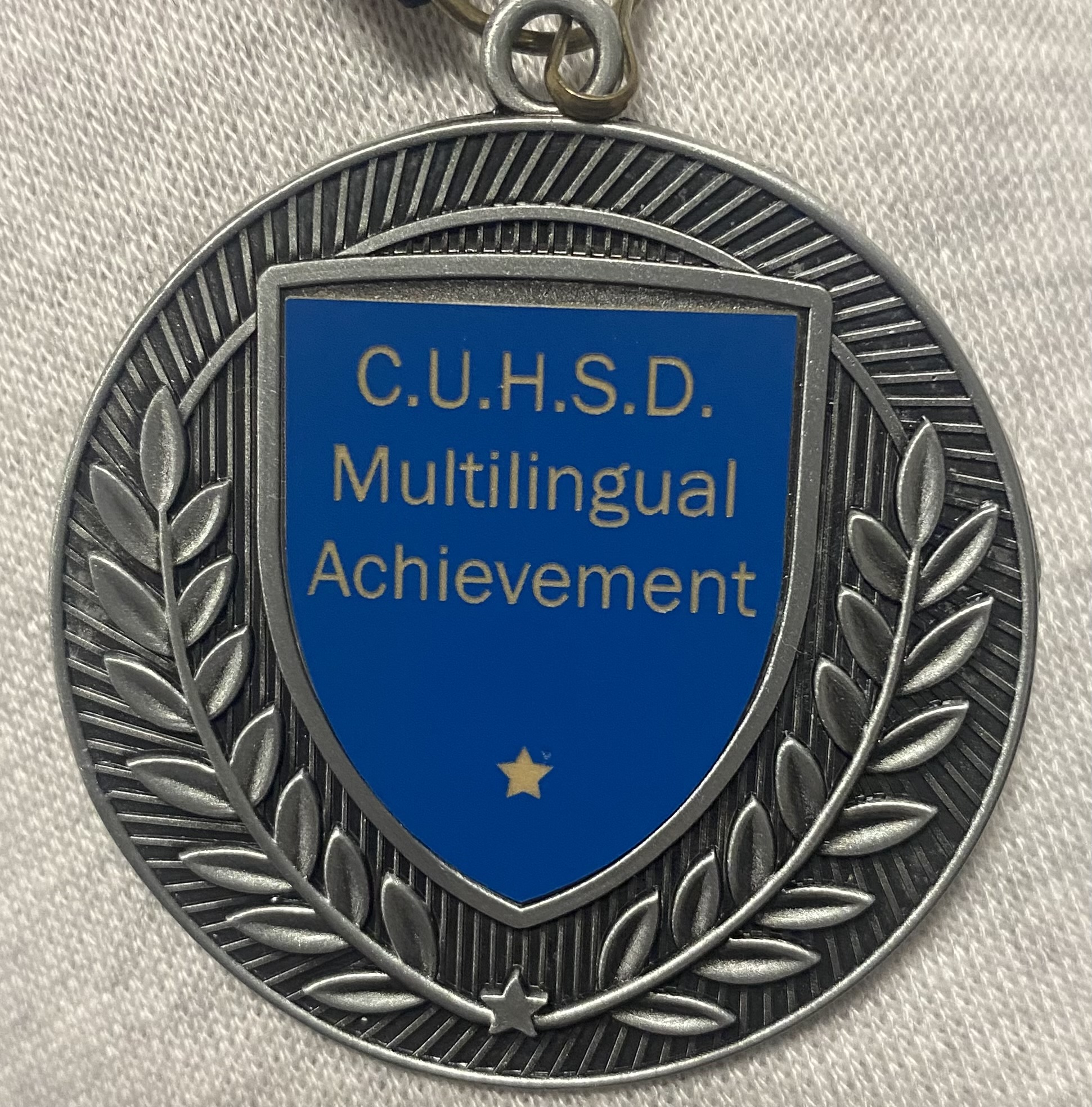
The Seal of Biliteracy is a state-recognized award that appears on a student’s diploma and transcript, certifying proficiency in two or more languages. For many students, earning this seal represents years of dedication, persistence, and hard work. Students who pass the ELPAC at Del Mar are also recognized through a multilingual achievement medal.
Colleges and employers increasingly value bilingualism, viewing it as a major advantage in today’s diverse and global workforce. The Seal of Biliteracy can give students an advantage in careers being able to speak more than one language.
For many students, earning this seal represents years of dedication, persistence, and hard work. Students who pass the ELPAC at Del Mar are also recognized through a multilingual achievement medal.
ELD student Parnian Mehran shared, “I am very excited to get the medal.”
This excitement reflects the pride many students feel when their hard work is recognized. The medal symbolizes more than academic success; it represents resilience, cultural identity, and the ability to succeed in more than one language.
In addition to recognition and awards, ELD students at Del Mar earn college-preparatory elective credits through ELD, that meet A–G requirements.
These requirements are necessary for admission to California State University and University of California campuses.
By allowing ELD courses to count toward these requirements, the school ensures that students are not academically limited because of their language barrier.
Overall, the ELD program at Del Mar reflects a commitment to equity, inclusion, and student success, helping students with their college admissions and being able to connect with society.